

The short answer: for the shower you need a sanitary silicone with a fungicidal additive – not a universal or construction silicone. The fungus-inhibiting additive prevents black mould in the joint. Proven professional products: OTTOSEAL S100 (premium, over 70 shades) and OTTOSEAL S105 (budget-conscious, 17 shades).
The quick decision: S100 or S105?
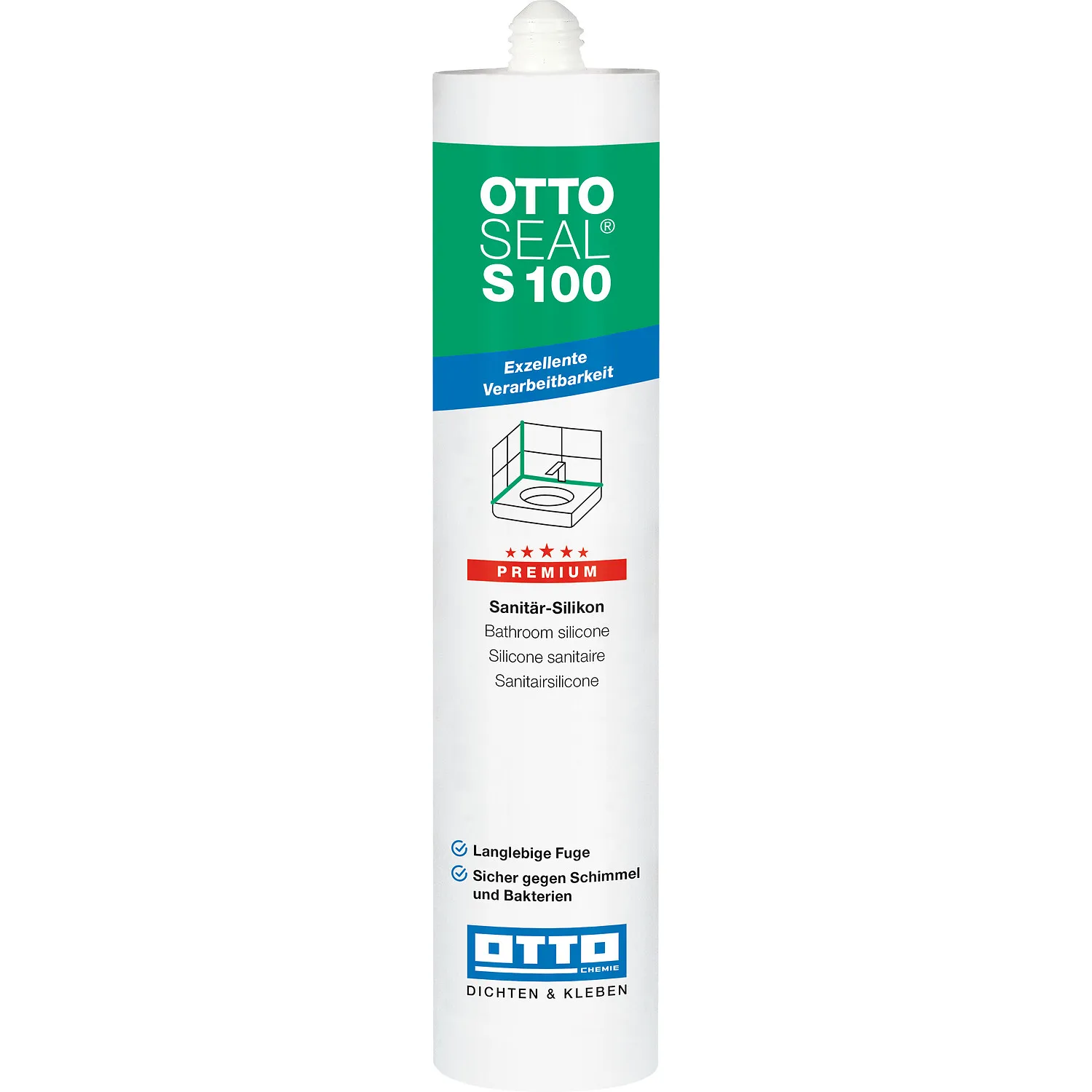
OTTOSEAL S100 Premium
- Over 70 shades – matched exactly to the grout
- Fungicidal and bacteriostatic additives
- DIN 18545, TOXPROOF (TÜV Rheinland)
- Tools outstandingly well – ideal for visible joints
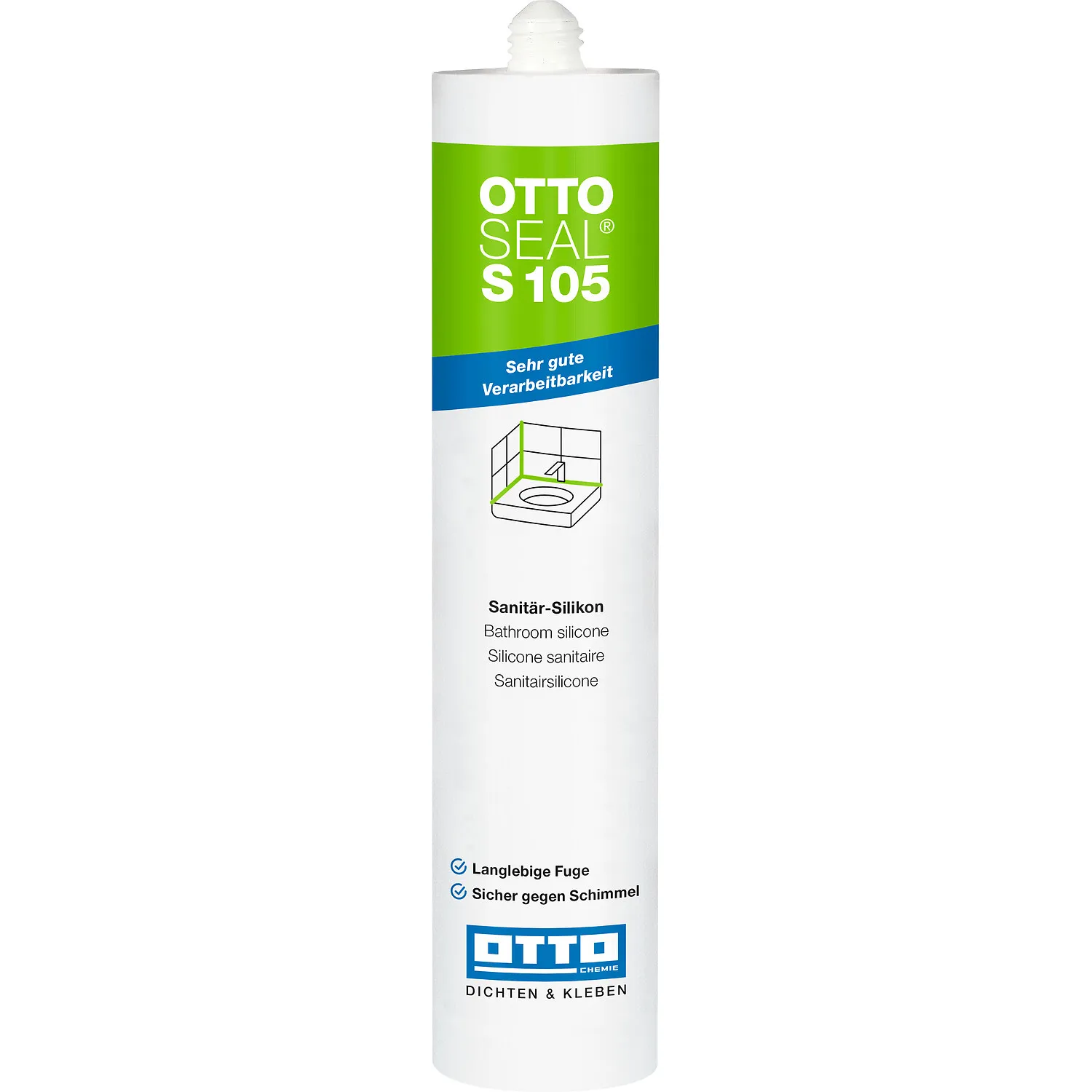
OTTOSEAL S105 Value pick
- 17 shades for bathroom, WC and kitchen
- Fungicidal – resistance to mould growth
- Tested to EN 15651, IVD quality mark, EMICODE EC1 Plus
- The economical choice for standard joints
Why does it have to be sanitary silicone?
Joints in the shower are permanently exposed to moisture, soap residue and cleaning agents. Sanitary silicones carry fungicidal and bacteriostatic additives for exactly that – they inhibit moulds and bacteria right in the joint. They are also permanently elastic and water-repellent, so that the connection joint between shower tray, tiles and wall takes up movement without cracking. You will find all suitable products in the category sanitary silicone.
The comparison in detail
| Criterion | OTTOSEAL S100 (Premium) | OTTOSEAL S105 |
|---|---|---|
| Colour range | Over 70 shades (including joint white, sanitary grey, transparent) | 17 shades for bathroom, WC and kitchen |
| Additives | Fungicidal and bacteriostatic | Fungicidal, resistance to mould growth |
| Standards & tests | DIN 18545 part 2 group E, IVD guidance note no. 3, TOXPROOF (TÜV Rheinland) | EN 15651 parts 1–3, IVD quality mark (ift Rosenheim), EMICODE EC1 Plus, French VOC class A+ |
| Application | Unique working properties, tools outstandingly well | Easy to work, elastic |
| Typical use | Visible joints with high demands, exact colour matching | Standard sanitary joints in bathroom, WC, kitchen; also profiled glass |
| Price | Premium segment | Budget-conscious entry |
Application: how the shower joint works out
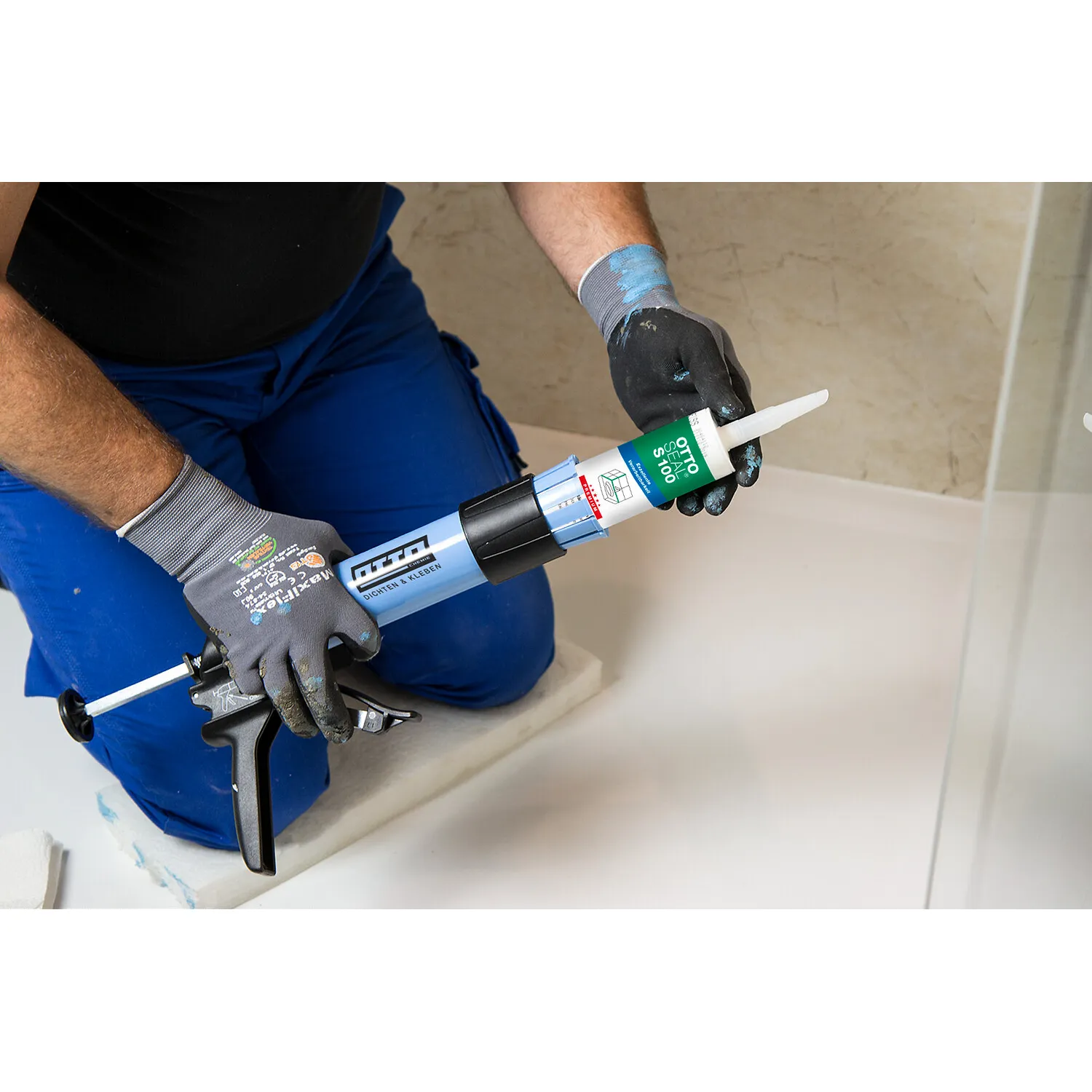
The bonding faces must be clean, free of grease, dry and sound. Both silicones are applied at +5 °C to +35 °C with a hand, pneumatic or cordless gun and tooled with tooling agent and a spatula before a skin forms.
Silicone cures at approx. 2–3 mm per 24 hours – plan the shower break accordingly.


Common questions about silicone in the shower
Which silicone is best for the shower?
A sanitary silicone with a fungicidal additive. In the premium range OTTOSEAL S100 with over 70 shades and TOXPROOF certification, as a budget-conscious alternative OTTOSEAL S105 with EMICODE EC1 Plus.
How long does silicone in the shower have to dry?
Silicone usually cures at approx. 2–3 mm per 24 hours, depending on humidity and temperature. Before the shower is used for the first time the joint should be cured right through.
Can silicone joints in the shower be painted over?
No, conventional silicone cannot be painted over. Our guide Painting over silicone explains the details and the alternatives.
What is the difference between OTTOSEAL S100 and S105?
Both are acetoxy-curing, fungicidal sanitary silicones. The S100 offers over 70 shades, DIN 18545 and TOXPROOF certification; the S105 is tested to EN 15651, carries the IVD quality mark and EMICODE EC1 Plus and is the cheaper choice with 17 shades.
Why does the silicone joint in the shower turn black?
That is usually mould growth caused by standing water and soap residue. Sanitary silicone with a fungicidal additive prevents it; wiping the joints dry regularly helps as well.


