
PU foam does not cure – causes and solution

Commercial 1K gun foam cures with atmospheric moisture, not with air. If it stays tacky, soft or collapses, there was usually a lack of moisture, it was too cold, the can was not shaken enough or the joint was filled too full. A connection that has not cured must come out and be redone; in uncertain conditions 2K assembly foam cures independently of atmospheric moisture.
Contents
What you need
Project template “Door frame and installation with PU foam”In short: Commercially available 1K gun foam does not cure with air but with humidity. If the foam stays tacky, soft or collapses, almost always moisture is missing in the connection, it was too cold, the can was not shaken sufficiently or the joint was filled too full. A connection that has not cured cannot be "dried afterwards" – it has to come out and be redone. Where the conditions are uncertain, a 2K assembly foam is the safe choice: it cures independently of the humidity.

Step 1: diagnosis – what exactly is wrong with the foam?
Before you cut anything out, classify the pattern of damage. The three states have different causes and different consequences.
A) Surface stays tacky
The foam has built up volume, but after hours still feels greasy and draws threads. Typical for: air that is too dry, substrate that is too cold. The reaction is running, but very slowly.
B) Foam collapses
The bead sags in on itself, becomes tough and darker. Typical for: applied too thick, joint filled too full, can too cold or shaken too weakly.
C) Firm outside, liquid inside
The skin is closed, and when cut into, liquid material runs out. Typical for: a joint cross-section that is too large filled in one go – the moisture does not reach the core.
Check criterion: Press a wooden splinter (not your finger – fresh PU foam sticks stubbornly to the skin) into the bead. If the foam springs back and nothing stays attached, it has cured through. If material stays on the splinter, the reaction has not finished.
Step 2: the six most common causes
The substrate was dry
This is by far the most frequent mistake. 1K PU foam cross-links via humidity. That is why manufacturers require the substrate to be prepared free of dust and grease and slightly dampened – with the Ottopur OP 910 it says expressly "clean and moisten thoroughly". In heated rooms in winter, on absorbent aerated concrete or on sun-warmed masonry, this moisture is missing completely.
Solution: Mist the joint flanks with a plant sprayer; with very large cross-sections work in two layers and dampen again between the layers.
It was too cold – for the substrate or for the can
Cold slows the reaction twice over: the foam is driven out of the can less well and cross-links more slowly. For the Soudafoam 2K assembly foam the manufacturer gives +5 °C to +35 °C for the substrate and +15 °C to +25 °C for the can – those are two separate values. A can that lay in the van overnight does not give a clean result even in the heated flat.
Solution: Store cans temporarily at room temperature. If work really has to be done in frost, a winter foam belongs in the gun – it is formulated for use down to -20 °C, while the ideal application temperature remains +5 °C to +30 °C.

The can was not shaken properly
Propellant and prepolymer separate on standing. If it is not mixed through, a foam comes out that builds up coarsely, cross-links poorly and later collapses. The manufacturer's information is unambiguous: shake vigorously for at least 20 seconds or 20 times (Soudafoam Gun B2, Ottopur OP 910, Soudafoam 2K), with the winter foam even around 30 times.
Solution: Shake again before every can change and after every longer pause – not just once at the start of the day.
The joint was filled too full
PU foam keeps expanding strongly after leaving the can. An overfilled cross-section presses itself together, the pores collapse and unreacted material remains in the core. The degrees of filling differ clearly depending on the product: approx. 65 % with the Soudafoam Gun B2, approx. 50 % with the 2K assembly foam, and with the winter foam cavities are to be foamed only one third full.
Solution: In case of doubt apply less and, after it has foamed up, set a second layer instead of filling generously once.
Gun or can were not ready for use
With the Ottopur OP 910 the manufacturer describes the initial start-up precisely: screw in the can, press the trigger lever immediately for approx. 10 seconds and let the material flow out fully, in order to fill the material channel and remove residual moisture from the gun. When changing cans the gun may stand empty for a maximum of one minute, otherwise foam cures in the adapter. And: an at least partly filled can must always stay mounted, so that the system is under pressure.
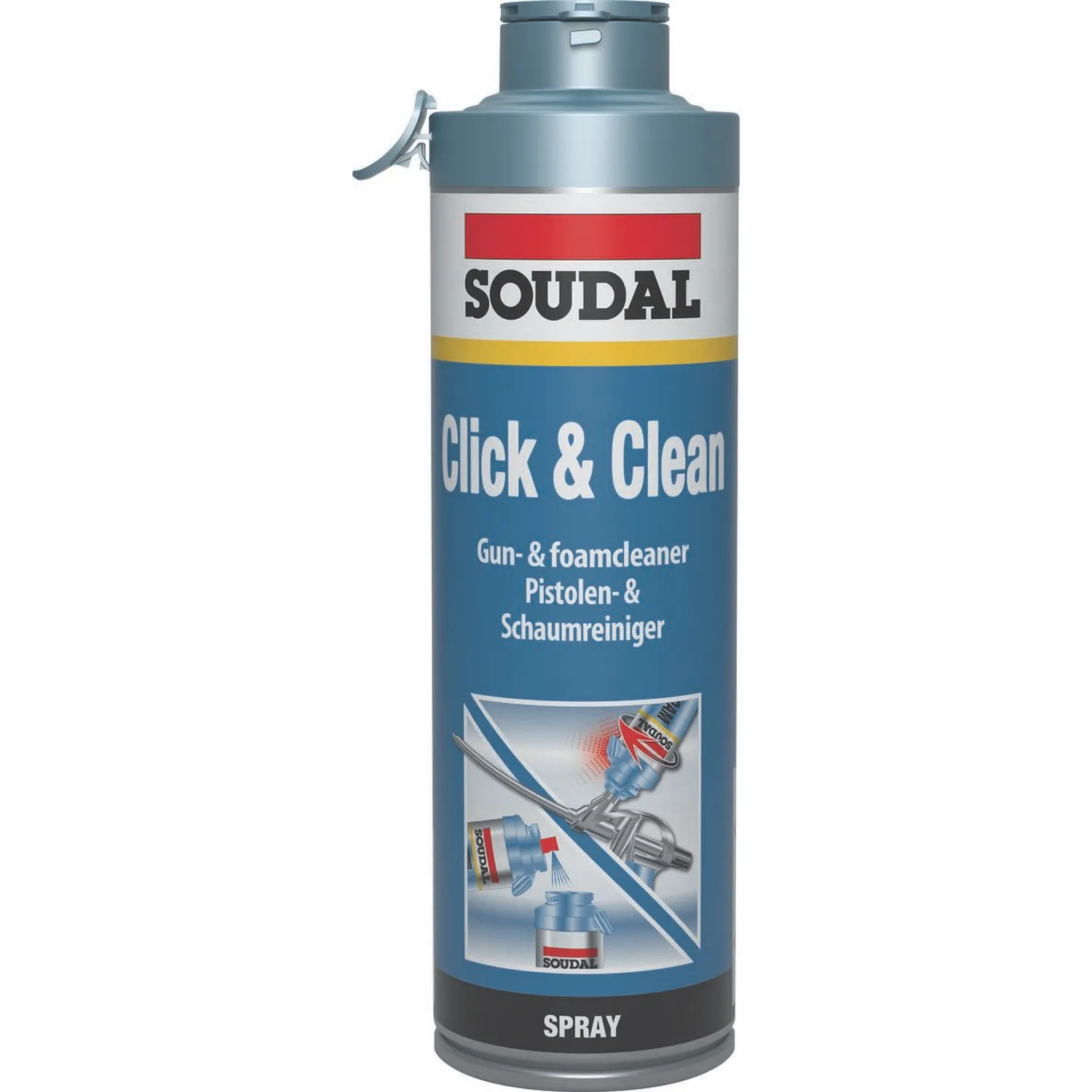
Solution: Dispense the first quantity of foam into a waste bag, not directly into the joint. Rinse the gun immediately after unscrewing with the gun and foam cleaner.
The substrate does not accept foam at all
Sometimes the foam does cure, but does not hold – and is then wrongly taken to be "not cured". PU foam adheres to almost all building substrates, but not to PE, PP, PTFE and silicone. Release agent residue, dust and grease also prevent the bond.
Solution: Check the substrate, degrease, remove PE foils and silicone residue. Where plastic is permanently involved, a different connection system belongs there – see our guide to RAL window installation.
Curing times at a glance – and how you check progress
Before you write off a connection as a failure: compare the time actually elapsed with the manufacturer's values. A foam that is still soft after 45 minutes is not a case of damage but simply not finished yet.
| Product | Skin formation | Cuttable | Loadable | Check |
|---|---|---|---|---|
| Soudafoam Gun B2 (1K) | approx. 8 min. | approx. 30 min. | approx. 12 hrs. | Wooden splinter test: nothing sticks |
| Ottopur OP 910 (1K) | – | approx. 30 min. | approx. 3–5 hrs. | Cut surface dry, no wetness in the core |
| Soudafoam 2K (400 ml) | – | approx. 20 min. | – | Frame stays true to size when the braces are released |
All values apply to normal conditions. With low humidity, cold or a large cross-section they lengthen considerably. Once cured, 1K PU foam is permanently temperature-resistant from -40 °C to +90 °C.
Step 3: how to restore a failed connection
A connection that has not cured through cannot be rescued. Water sprayed on afterwards no longer reaches the core, and a soft foam neither carries load nor seals.
- Remove everything soft. Work back with knife and spatula to sound, firm foam. Fresh material can be taken off with the Click&Clean foam cleaner or acetone, cured foam only mechanically.
- Loosen residue on smooth surfaces. For cured foam residue on plastic, coatings or aluminium there is the PU Remover: apply generously, leave for 30 minutes to a maximum of 2 hours, then pull off dry. Do not use on copper, zinc, brass and porous substrates – stains threaten there. Always do a compatibility test beforehand.
- Prepare the flanks. Remove dust and grease, then dampen lightly.
- Foam again – with the right product. Under normal conditions 1K gun foam, in cold winter foam, with time-critical door frames or uncertain humidity 2K foam.
- Let it cure and only then cut. Cut off the excess flush with the knife once the cutting time has been reached.
- Protect against UV. Exposed PU foam is not UV-resistant and has to be painted over, plastered over or covered with a sealant.
When 2K foam is the better decision
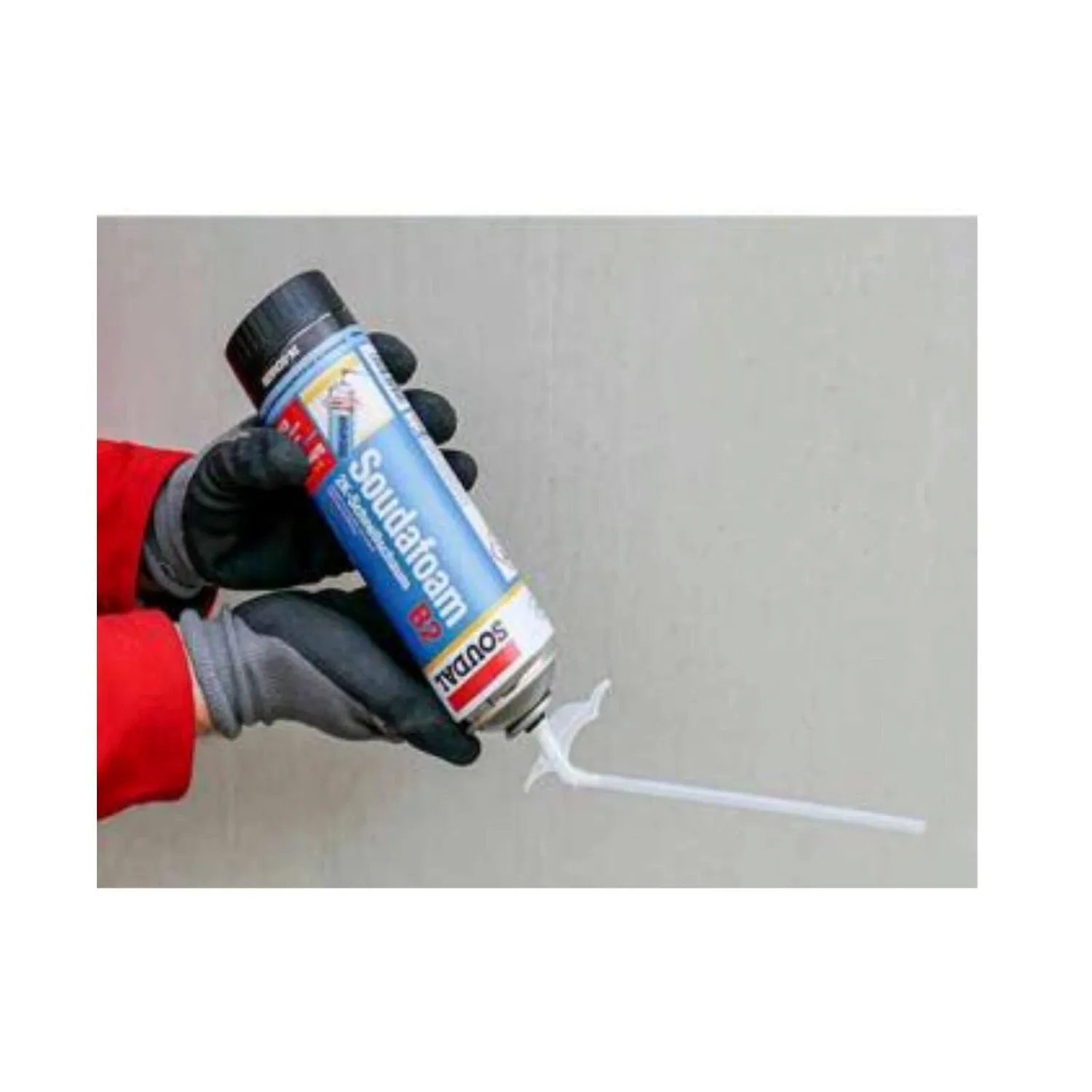
The decisive difference: 2K assembly foam brings its hardener with it and cures independently of the humidity. It is cuttable after just around 20 minutes and builds up no pressure on the frame in the process. A 400 ml can is enough for one to two door frames. Exactly where 1K foam regularly fails – dry heating air, winter building site, tight schedule – it is the more reliable solution.
Which foam is suitable for what otherwise is explained in the guide Which PU foam for window installation?. You will find the complete range in the category Construction foam & PU foam.
Common mistakes – and how to avoid them
| Mistake | Consequence | Better |
|---|---|---|
| Foaming a dry joint | Core stays soft, connection does not carry | Mist the flanks, work in layers |
| Taking the can cold from the vehicle | Poor expansion, slow cross-linking | Bring the can to +15 to +25 °C |
| Filling the joint 100 % | Foam collapses, frame distorts | Keep to the manufacturer's degree of filling (approx. 65 %, 50 % or one third) |
| Leaving the gun lying after work | Foam cures in the adapter, gun is ruined | Rinse immediately with foam cleaner |
| Storing cans lying down or hot | Valve sticks, can under pressure endangered | Upright at +5 to +25 °C, never above +50 °C |
| Leaving foam exposed | UV degradation, the connection crumbles | Paint over, plaster over or seal |
Frequently asked questions
Can I spray PU foam that has not cured with water afterwards?
On the surface that helps a little, in the core not. As soon as a skin has formed on the outside, no more moisture gets inside. A soft core stays soft – the connection has to come out.
How long do I have to wait before I cut?
Depending on the product around 20 to 30 minutes. The Soudafoam Gun B2 is cuttable after approx. 30 minutes, but loadable only after about 12 hours. The Ottopur OP 910 is cuttable after approx. 30 minutes and loadable after 3 to 5 hours. In cold or dry air it takes longer.
At what temperature may I apply PU foam?
For the 2K assembly foam the manufacturer gives +5 °C to +35 °C for the substrate and +15 °C to +25 °C for the can. The winter foam is formulated for use down to -20 °C, its ideal application temperature is +5 °C to +30 °C.
How do I get cured foam off again?
As a rule only mechanically. On non-porous surfaces such as plastic, coatings or aluminium the PU Remover dissolves the residue: apply generously, leave for 30 minutes to a maximum of 2 hours, then pull off with the spatula. Do not use on copper, zinc, brass or porous substrates.
How do I tell that the can is too old?
Typical signs are weak expansion, coarse pores and a foam that hardly expands. Opened cans are to be used up in the short term; unopened ones belong stored upright, cool and dry at +5 °C to +25 °C. Storing them lying down glues the valve.
Why does the foam not hold at all in some places?
PU foam adheres to almost all building substrates, but not to PE, PP, PTFE and silicone. Dust, grease and release agents also prevent the bond. Check the substrate before you foam again.
Not sure which foam suits your situation? Give us a call: +49 (0) 2831 - 916 77 03. Further reading: How to: apply PU foam correctly.
Matching calculator
More guides on this topic
All guides on “PU foam, windows and roofs” Comparison
Guide: gun foam or hand-held foam – which is better?
Gun foam or hand-held foam: when the foam gun is worthwhile and when not
 Problem solving
Guide: removing PU foam – fresh and cured
Remove fresh PU foam with cleaner, cured foam mechanically and with remover gel
 Buying guide
Guide: which PU foam for window installation?
1K hand-held foam or 2K assembly foam: which PU foam for one or several windows