

Short answer: To paint a wall, first cover the floor and furniture, tape off the edges with painter's tape and check that the substrate is firm, dry, clean and load-bearing. Then cut in corners and edges with a flat brush and roll the surface wet-on-wet without a break: two to three strips from top to bottom, spread the paint across, and finish by rolling from top to bottom. For living spaces a high-opacity wall paint such as Düfa D420 Premium White is suitable – according to the data sheet approx. 125 ml per m² per coat, can be painted over after approx. 4 hours. Without strong colour contrasts, one coat is usually enough.
What you need: shopping list
Basic set (always required)
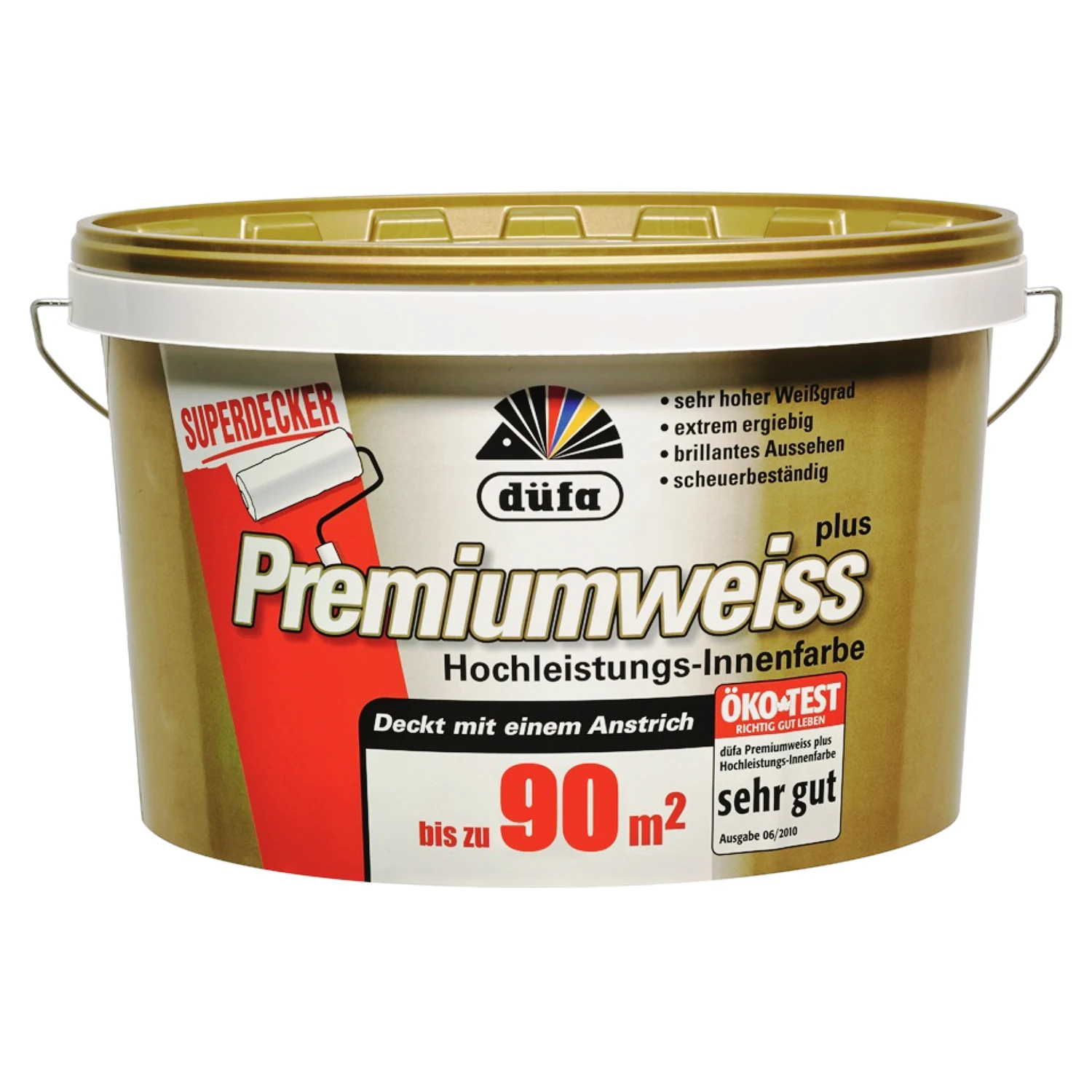
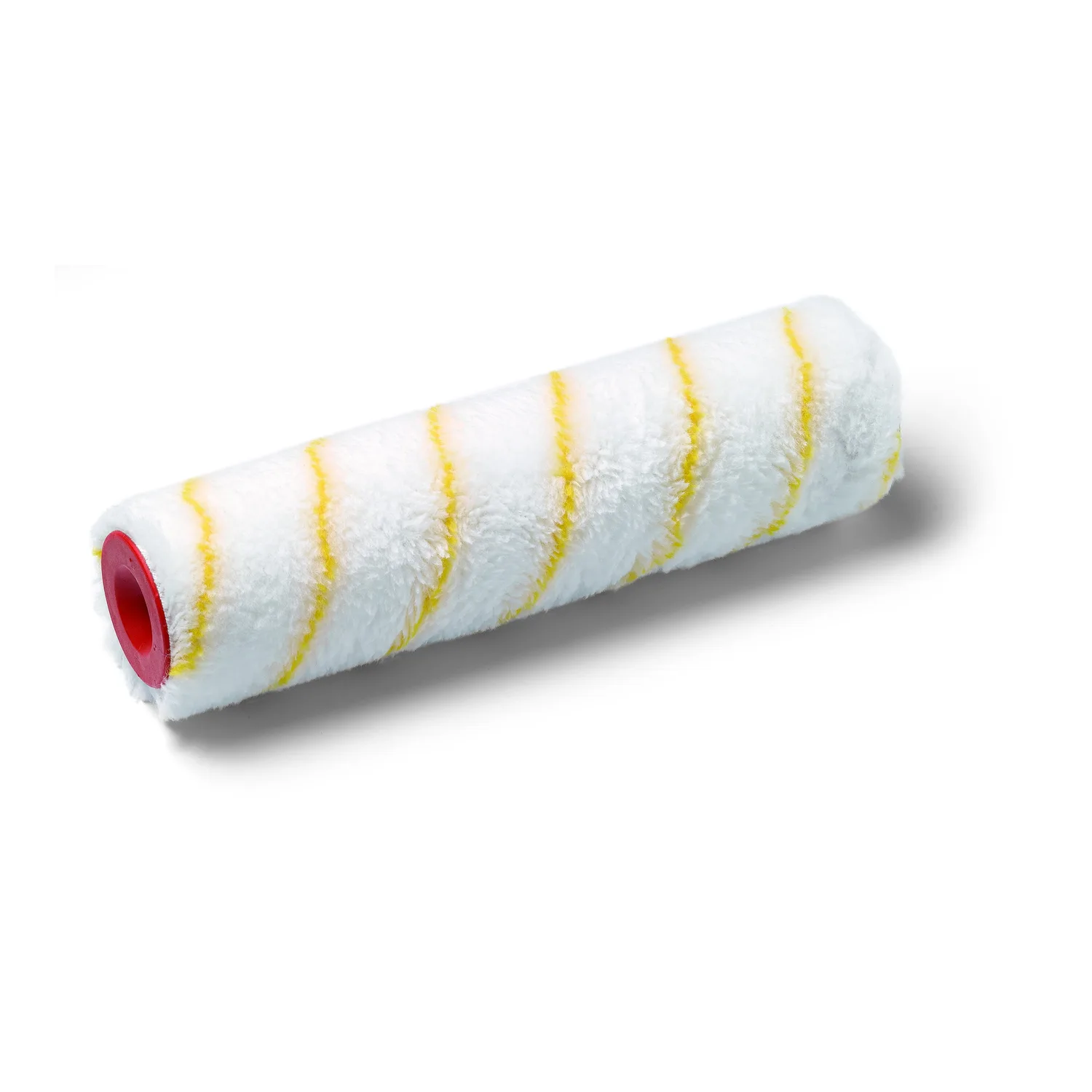
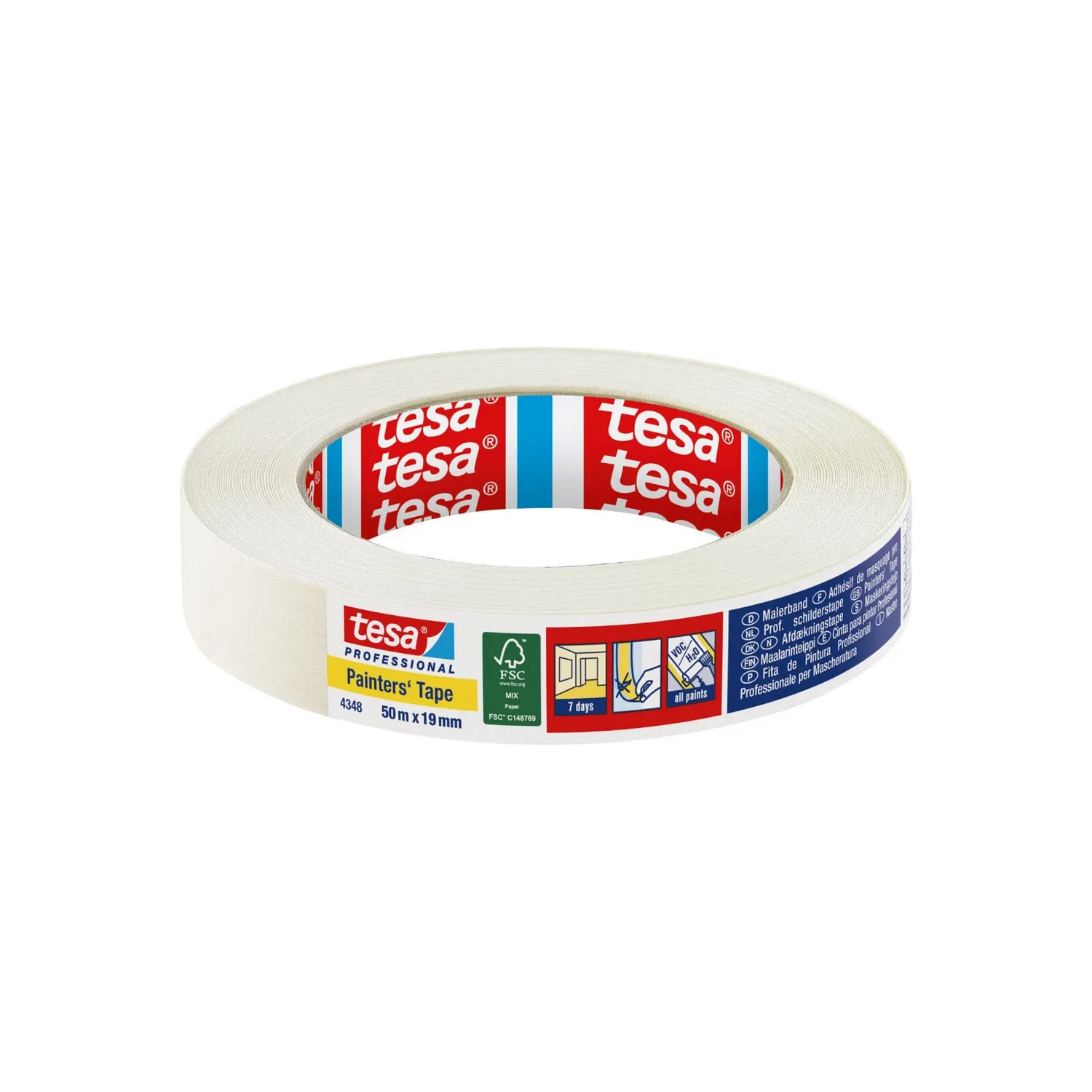
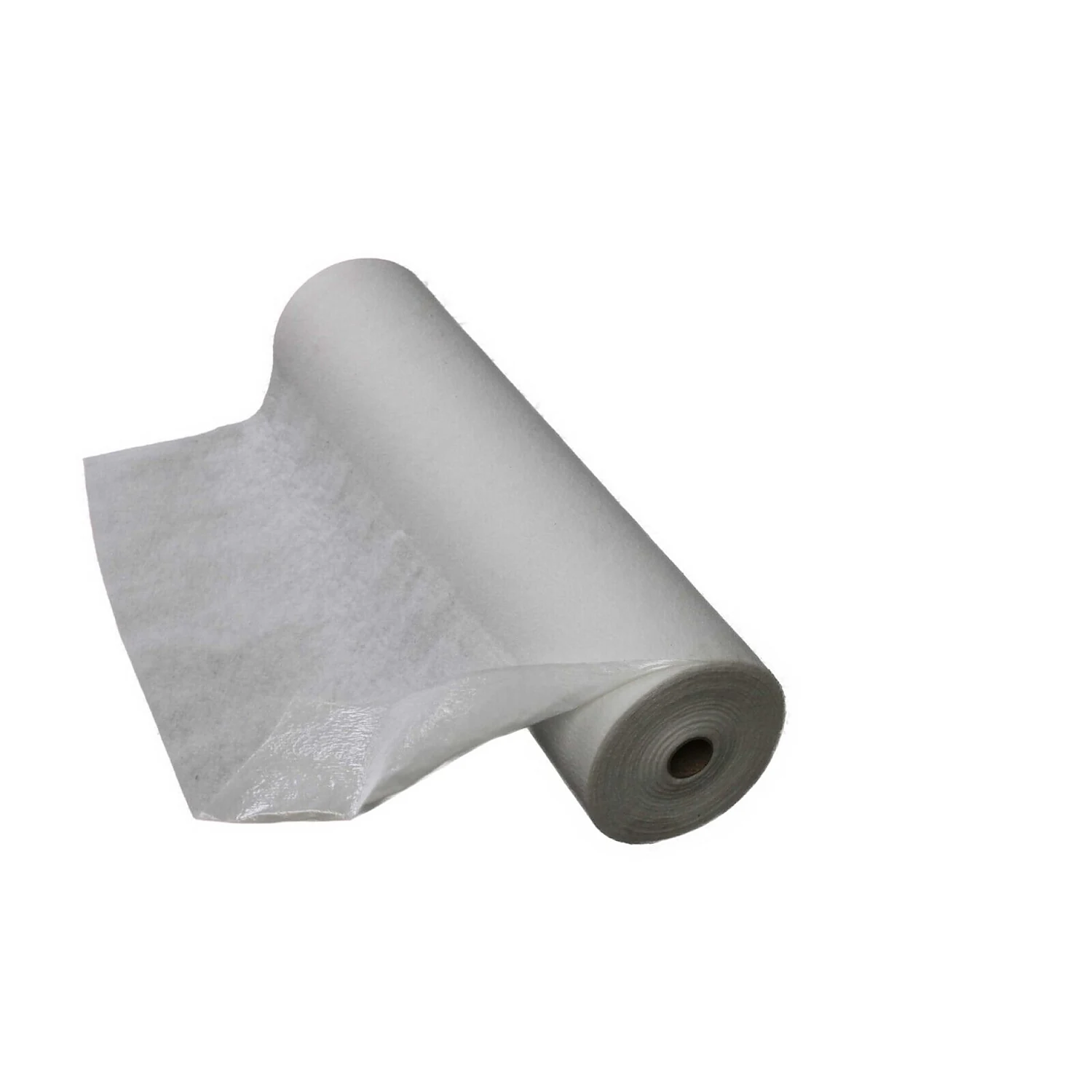
Tools: Roller frame in the width of the roller (18 or 25–27 cm), paint tray with ribbed roller ramp and a flat brush for corners and edges. You will find all wall paints in the category Wall paint & interior paint.
Optional – depending on room and substrate
- Düfa D424 Silk latex – instead of D420 for hallways, stairwells and children's rooms: wet scrub resistance class 1, withstands frequent damp wiping
- Düfa D112 bathroom & kitchen paint – instead of D420 for bathroom, kitchen and cellar: according to the data sheet, the higher alkalinity helps prevent mould growth
- Düfa D520 stain blocker – only for nicotine, water or grease stains, before the topcoat
- Ottoflex Tiefengrund – only for powdery, strongly or unevenly absorbent substrates
- Ottoseal A210 paintable acrylic with caulking gun – close cracks and junctions with low movement before painting
- Dust sheet for furniture and radiators, telescopic pole 0.77–3.00 m for ceilings and high walls
- Silver Line Texalon roller 18 mm – alternative for smooth walls such as plasterboard
Which wall paint for which room?
Wall paints are classified to DIN EN 13300. Two values count for your choice: the wet scrub resistance shows how much damp cleaning the wall can withstand (class 1 is the highest scrub class), and the hiding power shows how well the paint covers at the stated yield (class 1 covers best). The values are taken from the manufacturers' technical data sheets.
| Paint | Use | Wet scrub resistance | Hiding power | Gloss | Consumption per coat |
|---|---|---|---|---|---|
| D420 Premium White | Living and bedrooms, ceilings | Class 2 | Class 1 at approx. 8 m²/l | G4 flat matt | approx. 125 ml/m² |
| D424 Silk latex | Hallway, stairwell, children's rooms | Class 1 | Class 2 at approx. 7 m²/l | G2a silk gloss | approx. 145 ml/m² |
| D112 Bathroom & kitchen paint | Bathroom, kitchen, cellar | Class 3 | Class 2 at approx. 6 m²/l | G3 matt | approx. 165 ml/m² |
| D520 stain blocker | Nicotine, water and grease stains | – | approx. 6 m²/l, usually one coat | matt | approx. 6 m² per litre |
Matt or silk gloss? Silk-gloss latex paint is easier to clean, but shows unevenness and lap marks more clearly than a matt paint. If you use it, prepare the substrate with particular care and work consistently wet-on-wet. For living spaces with normal wear, a flat matt paint such as D420 is the simpler choice.
Does white stay white? D420 and D424 can be tinted – D420 with at most 3 %, D424 with at most 5 % full-strength and tinting colour. Tinting can mean that D420 is no longer preservative-free.
How much paint do you need?
Calculate the wall area: perimeter of the room × room height, minus large windows and doors. A room with a 4 × 5 m floor area and 2.50 m height has 2 × (4 + 5) × 2.50 = 45 m² of wall area, and the ceiling a further 20 m².
| Example 4 × 5 m, D420 (approx. 125 ml/m²) | 1 coat | 2 coats |
|---|---|---|
| Walls (45 m²) | approx. 5.6 l | approx. 11.3 l |
| Ceiling (20 m²) | approx. 2.5 l | approx. 5 l |
| Pack coverage per coat | 2.5 l ≈ 20 m² · 5 l ≈ 40 m² · 10 l ≈ 80 m² | |
The values apply to smooth, slightly absorbent substrates. On rough surfaces such as woodchip, the data sheet calls for more – determine the exact quantity on a sample area. For your own dimensions and other colours, the paint calculator works out litres and whole packs.
Why cross-wise and wet-on-wet?
Visible lap marks and streaks appear wherever you interrupt a continuous surface. The manufacturers therefore recommend working through each wall without a break and as a whole: first apply two to three strips from top to bottom, then spread the paint across and finish by rolling once more from top to bottom – without heavy pressure on the roller.
Rolling across distributes the paint evenly, and the final roll in one direction gives a uniform surface appearance. Areas brushed in corners and edges are blended well so that they do not show.
Step by step: painting a wall
1Cover the room and tape the edges
Unroll the protective fleece in room-length strips. If it is laid with sufficient overlap, no additional tape is needed; the underside is self-adhesive and slip-resistant. Do not use it on freshly laid ceramic tiles or porous stone slabs. Cover furniture and radiators with a dust sheet.
Tape window frames, door linings, skirting boards and socket surrounds with Tesakrepp 4348: lay it bubble-free on the dry, dust-free substrate and press the edge down firmly. Why: according to the data sheet, paint splashes must be washed off with water straight away – what is covered stays clean. Check: the tape lies without bubbles or creases and the edge is pressed down throughout.
2Check and clean the substrate
The wall must be firm, dry, clean and load-bearing, free of efflorescence, sinter layers and release agents. Brush or wash off chalky or powdery old paint; roughen glossy old paint. All common interior substrates are suitable: render, concrete, plasterboard, woodchip and paper wallpapers, as well as sound old dispersion paint. Whether priming is needed beforehand is explained in step 4.
Why: paint only adheres as well as the layer beneath it – on loose or chalky substrate it will later peel off with it. Check: wipe your flat hand across the wall. If dust or paint stays on your hand, the surface must be cleaned and primed.
3Fill cracks and junctions
Fill fine cracks and joints with low movement – for example between wall and door lining – with Ottoseal A210 paintable acrylic: it is paintable to DIN 52452 and designed for a permitted total joint movement of 10 %. Apply it with the caulking gun and smooth it with a damp tool before a skin forms (approx. 2 hours). Do not apply below +5 °C.
Why: open cracks show through every coat. Important: if acrylic is painted over in joints, the manufacturer requires at least 1 week's drying time. Even then, cracks, discolouration or gloss differences can appear in the paint above the joint – the wall paint data sheet also says so. For recurring cracks between wall and ceiling, our guide Crack between wall and ceiling helps; when acrylic and when silicone is right is explained in Silicone or acrylic – what for?
4Only if needed: prime or block stains
Priming: sanding, strongly or unevenly absorbent substrates, repaired areas, filler and filled plasterboard need a penetrating primer, according to the data sheet. Firm, slightly absorbent renders, unpainted woodchip and matt, slightly absorbent old paint do not need priming. Ottoflex Tiefengrund is diluted 1:1 to 1:2 with water on cement-based substrates; on gypsum substrates apply it undiluted. It is dry after approx. 2 hours (+20 °C, 50 % relative humidity).
Blocking stains: nicotine, water, soot or grease stains bleed through ordinary wall paint. Coat them beforehand with Düfa D520 stain blocker – it covers so strongly that one coat is usually enough.
Check: after drying, the primer must not form a closed, glossy film – otherwise it disturbs the adhesion of the wall paint. If the surface is glossy, the application was too heavy.
5Prepare paint and tools
Stir the paint thoroughly. For an intermediate coat on high-contrast surfaces you may dilute it with at most 10 % water; apply the final coat undiluted or with at most 5 % water. On a continuous surface, use only material from one batch. Rinse the roller sleeve briefly with water before first use and squeeze it out, so that no loose fibres get into the paint.
Why: paint diluted too much loses hiding power, shade and durability. Check: room and wall are at least +5 °C – also during drying. According to the data sheet, +15 to +25 °C at 30 to 60 % relative humidity is ideal.
6Cut in corners and edges
Use the flat brush first to cut in corners, edges and junctions with the ceiling, windows and door linings – wherever the roller cannot reach. Blend the brushed areas well.
Why: the roller then only has to work the surface. Check: only cut in as much as you can roll wet-on-wet straight afterwards – otherwise dried brush strokes will show.
7Roll the surface cross-wise
Load the paint from the paint tray and wipe the roller off on the ribbed ramp. Roll two to three strips from top to bottom, spread the paint across, and finish by rolling once more from top to bottom – without heavy pressure. Work through each wall as a whole without a break. For ceilings and high walls use the telescopic pole.
Why: this prevents lap marks. If you must pause briefly, dip roller and brush in the paint so they do not dry out. Check: the surface looks evenly wet, with no dry patches or paint ridges at the strip edges.
8Second coat, peel off tape, clean tools
At +20 °C and 65 % relative humidity the wall paint can be painted over after approx. 4 hours. Whether a second coat is needed you see after drying: if the old shade or the substrate shows through, paint again. Remove the painter's tape promptly and at an acute angle while the paint is still slightly damp – the edge stays cleanest that way.
Roll out the roller and brush thoroughly and clean them immediately with water, adding a little washing-up liquid if necessary – dried dispersion paint hardly comes out of the pile again. Ventilate well so the wall dries quickly. Check: the paint is fully dry after approx. 4 days; only then wipe the wall with a damp cloth.
Drying times at a glance
| Work step | Waiting time | Check |
|---|---|---|
| Ottoseal A210 paintable acrylic before painting over | at least 1 week (skin forms after approx. 2 h) | joint firm, no more dents |
| Ottoflex Tiefengrund | approx. 2 h (+20 °C / 50 % RH) | surface dry and matt, not glossy |
| Wall paint before the next coat | approx. 4 h (+20 °C / 65 % RH) | surface dry, not tacky |
| Remove painter's tape | directly after the last coat | paint still slightly damp |
| Wall paint fully dry | approx. 4 days (+20 °C / 65 % RH) | only then clean with a damp cloth |
Lower temperatures and higher humidity lengthen all times.
Common mistakes – and how to avoid them
- Break in the middle of a wall: where fresh paint meets paint that has already set, a lap mark remains. Roll each wall to completion without interruption.
- Paint diluted too much: according to the data sheet, more than 10 % water costs hiding power, shade and durability.
- Painted too cold: according to the data sheet, no painting below +5 °C room or wall temperature – this also applies during drying.
- Two batches on one wall: on continuous surfaces use only material from one batch, otherwise colour differences may show.
- Acrylic painted over too early: paintable acrylic needs at least 1 week before painting over.
- Primer applied too heavily: a glossy film of primer disturbs the adhesion of the paint.
- Individual patches repaired: repairs in the middle of an area show more or less depending on the light – according to the manufacturer this is unavoidable. It is better to paint the whole wall from corner to corner, with the same batch and the same tools.
Want to paint outdoors? Wood outdoors requires a different system – see Painting a timber facade with an opaque finish.
Frequently asked questions about painting walls
How often do I need to paint a wall?
Without strong colour contrasts, according to the data sheet one coat of undiluted paint is usually enough. On high-contrast surfaces, apply an intermediate coat with at most 10 % water and then a final coat undiluted or with at most 5 % water.
How much wall paint do I need per m²?
Per coat on smooth, slightly absorbent substrate: Düfa D420 approx. 125 ml/m², D424 silk latex approx. 145 ml/m², D112 bathroom & kitchen paint approx. 165 ml/m². On rough substrates such as woodchip, correspondingly more. A 10 l bucket of D420 is therefore enough for around 80 m² per coat.
Do I have to prime the wall before painting?
Only if the substrate is powdery, strongly or unevenly absorbent, or has been filled. Firm, slightly absorbent renders, unpainted woodchip and matt, slightly absorbent old paint do not need priming. Glossy old paint is roughened.
How long must wall paint dry before I paint again?
At +20 °C and 65 % humidity the paint can be painted over after approx. 4 hours and is fully dry after approx. 4 days. In cold or humid conditions it takes longer.
Which paint roller do I use for painting walls?
For the standard roller application, the data sheet recommends an interior paint roller with 12 mm pile. For woodchip and smooth or finely textured walls, a medium-pile roller; for coarsely textured surfaces, a long-pile roller.
Painting a wall with stains – what helps?
Nicotine, water, soot and grease stains bleed through ordinary wall paint. Coat them beforehand with a water-based stain blocker such as Düfa D520, then paint the whole wall with wall paint.


