
Removing cement haze: how to get tiles clean again

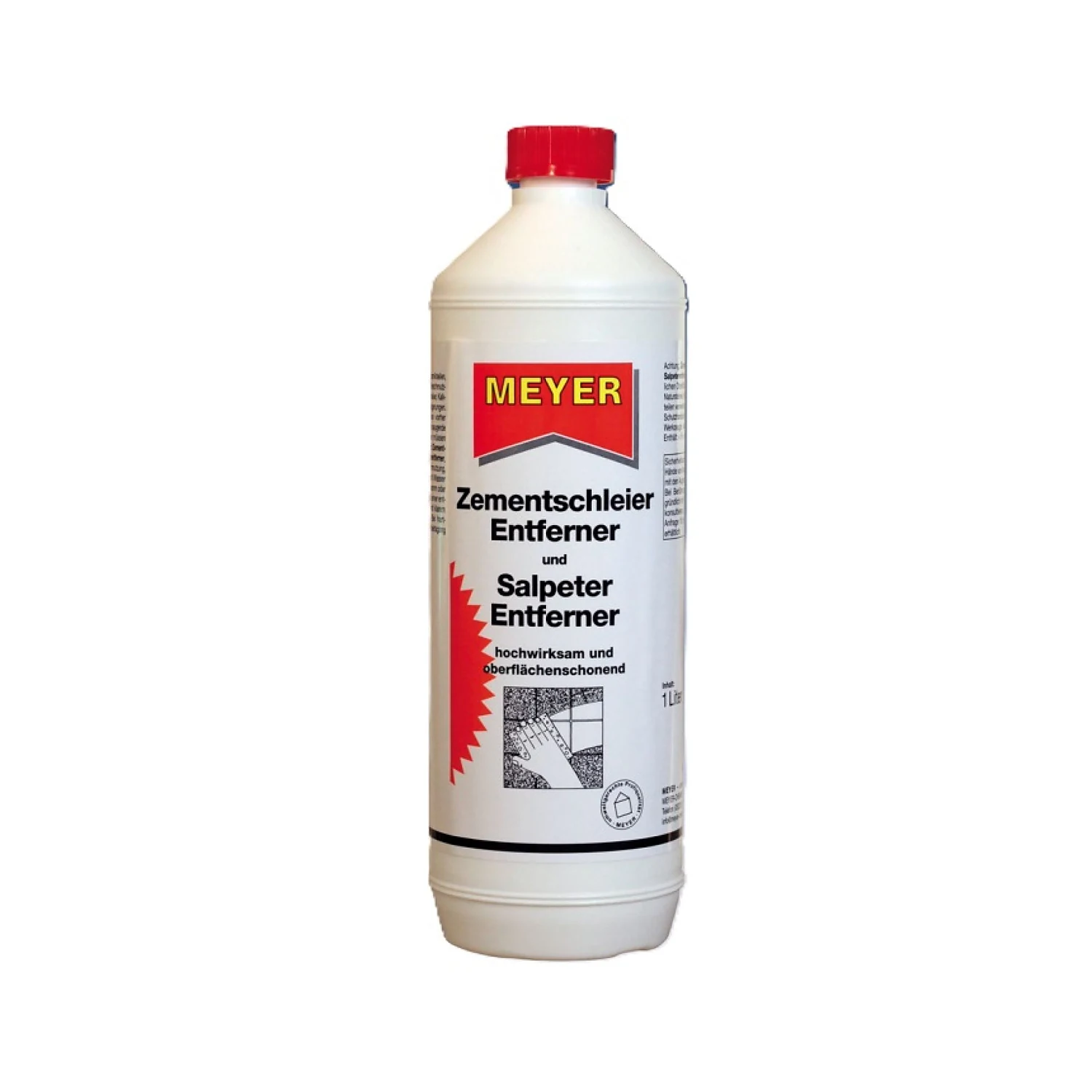
Short answer: Remove cement haze from acid-resistant tiles with an acidic cement haze remover. Pre-wet the surface with water, apply the product, let it work for a few minutes and rinse thoroughly with plenty of water. The Meyer cement film remover is used undiluted for heavy haze and diluted with water up to 1:5 for light haze. Marble, limestone and bare iron cannot tolerate acid. Also check whether the grout tolerates acidic cleaners. You will find other cleaners under Cleaners and silicone removers.
How to recognise cement haze
After tiling and grouting, a fine grey film often remains on the tiles. It forms from residues of tile adhesive and grout that were not fully removed when wiping. On wet tiles it is barely visible, but once dry the surface looks dull and blotchy. Once the haze has cured, clear water often no longer helps.
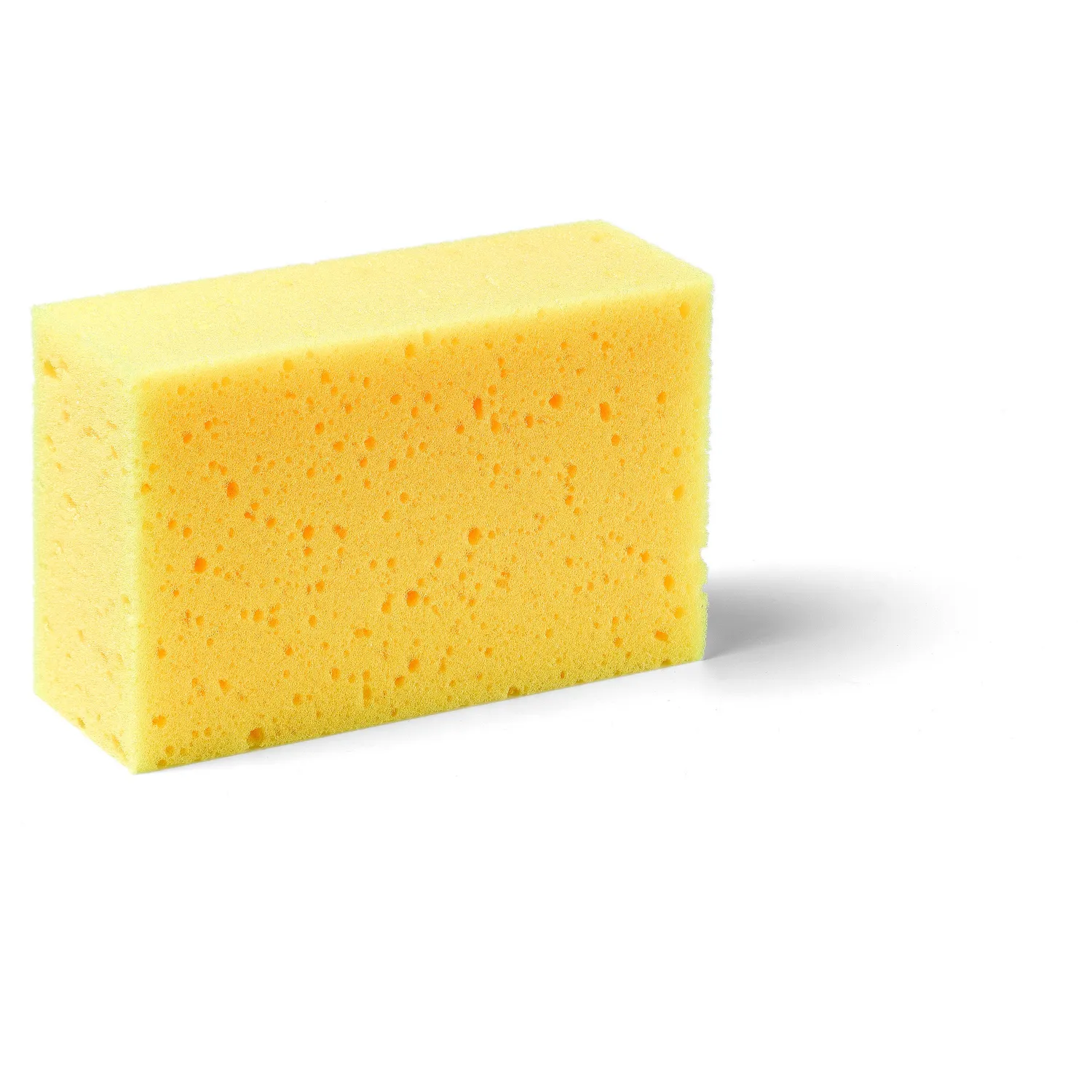
The best way to avoid haze is to prevent it when grouting. Weber advises for its grout weber.fug 875 F: after it has begun to set, wipe with a damp sponge or sponge float, and remove the remaining grout film later with a slightly damp sponge. The acid-resistant HYDRO tile sponge and the TILL Hydro tile sponge float are suitable for this. How to grout yourself is explained in our guide Laying and grouting tiles.
First check: does the surface tolerate acid?
According to its technical data sheet, the Meyer cement film remover is very acidic, with a pH of about 0.2. It contains inorganic acids and citric acid. For this reason it is not suitable for every surface.
| Surface | Cement haze remover | Note from the manufacturers' data |
|---|---|---|
| Tiles and ceramic, acid-resistant | suitable | Data sheet: tiles and ceramic items of all kinds |
| Cotto, clinker, lime-free natural stone | suitable | Saturate absorbent surfaces with water first |
| Chrome and stainless steel | suitable | Explicitly named in the data sheet |
| Marble, limestone, lime-containing natural stone | not suitable | Acid attacks the stone |
| Bare iron and steel | not suitable | Explicitly excluded in the data sheet |
| Joints made of weber.fug 875 F | not suitable | Weber excludes strongly acidic cleaners |
On such joints, remove the haze with water and the tile sponge only. For other grouts, the grout's data sheet applies. If it says nothing about acidic cleaners, test the product on an inconspicuous spot. Meyer recommends this for every surface in any case. You will find grout under Tile adhesive and grout.
How to remove cement haze step by step
1Make a test spot
Apply a little of the product to an inconspicuous spot, for example behind a door or under a piece of furniture. Rinse it off after a few minutes and let the spot dry. Check: tile and grout look as they did before, only cleaner. If the surface turns dull, rough or pale, stop.
2Remove coarse residue
Beforehand, loosen thick grout residue with a scraper, brush or wooden block.
3Pre-wet
Wet absorbent surfaces and the grout with water until they no longer absorb any. Pre-wet walls from the bottom upwards. This is what Meyer prescribes in its technical data sheet.
4Mix and apply
For heavy haze, use the cement haze remover undiluted; for light haze, dilute it with water up to 1:5. Apply it evenly with a sponge, cloth, scrub brush or brush. Let it work for a few minutes, but do not let it dry. Brush again where necessary.
5Rinse thoroughly
Rinse the surface with plenty of water and wipe it up. Keep rinsing the sponge or cloth thoroughly with plenty of water as you go. If the haze is stubborn, repeat the treatment. Check: once dry, no grey film should be visible. Clean your tools with water immediately after use.
Protection when working
The safety data sheet labels the cement haze remover with the signal word “Danger”: it causes severe skin burns and eye damage. Wear acid-resistant gloves, according to the safety data sheet made of nitrile rubber with a material thickness of 0.4 mm, and tight-fitting safety goggles to EN 166, such as the Topview safety goggles. Keep children away. If the product gets into your eyes, rinse them gently with water for several minutes and call a doctor or the poison emergency service immediately.
How much cement haze remover do I need?
Meyer gives a consumption of 50 to 200 g per m², depending on how strong the haze is. At a density of 1.05, a 500 ml bottle weighs about 525 g. Undiluted, it therefore covers around 2.5 m² with heavy haze and up to about 10 m² with light haze. Diluted, it covers a larger area.
Common mistakes and how to avoid them
- Treating dry surfaces: Meyer requires absorbent surfaces to be saturated with water first. This includes the grout.
- Letting the product dry on: According to the technical data sheet, the product must not dry on. Work on small areas one after another.
- Cleaning marble or limestone: Acid attacks the stone. Do not use cement haze remover on lime-containing stone.
- Rinsing too little: Acid residues remain in the grout. Rinse with plenty of water and keep washing out the sponge.
For ongoing care after the building phase, read Cleaning grout and Cleaning tiles with household remedies.
Frequently asked questions
How do I get cement haze off tiles?
Wipe fresh haze off with a slightly damp sponge. For cured haze on acid-resistant tiles, use a cement haze remover: pre-wet, apply, let it work for a few minutes and rinse thoroughly with plenty of water.
Can I remove cement haze with household remedies?
Vinegar is also an acid. The same limits apply to it for marble, limestone and sensitive grout. We have no manufacturer's information on its effect on cement haze, so we do not recommend it.
Can I use cement haze remover on porcelain stoneware?
Meyer names tiles and ceramic of all kinds. Still, check on a test spot that the surface stays unchanged.
When can I clean after grouting?
That depends on the grout. For weber.fug 875 F, Weber excludes strongly acidic cleaners; ordinary household cleaners are permitted only after 14 days. For other grouts, the grout's data sheet applies.
Does the cement haze remover also help against lime and efflorescence?
Yes. Meyer names lime deposits, urine stone, rust and salt efflorescence on render, exposed masonry, clinker and concrete in its technical data sheet.


More guides on this topic
All guides on “Floors, screed and tiles” Instructions
Guide: applying levelling compound
Levelling compound on old adhesive residues: what may stay, what has to go and how
 Basics
Guide: bonded screed – build-up and bonding primer
Build-up, bonding bridge and minimum thickness of the bonded screed, distinguished from the separating layer
 Instructions
Guide: cleaning joints – the right method for every type of joint
Clean cement, acrylic, silicone and epoxy joints properly without damaging them